MITx: 11.154x Launching Innovation in Schools
Activity: Vision Research
 You've looked at two examples of school systems developing a cohesive vision, Mashpee Public Schools and the Benjamin Banneker Charter Public School. Did you see something in these visions that you liked? Explore that further!
For this activity, research examples of schools with visions, and also initiatives, that you find to be especially appealing and/or are particularly relevant to your problem of practice. 
Start by taking just 10 minutes and do more if it seems helpful. Consider examples in the course and elsewhere. Take a look at the Model Menu on the next page. You might go to websites like Edutopia or KQED MindShift. Maybe you'll find reports from schools that are working towards something that is both relevant and valuable for you.
There are many educational models, tools, and innovations to consider. When you're looking at a certain model or tool, etc., think about how, and if, it fits with your school.
Please share a promising model, tool, or innovation with your classmates. Provide a brief summary and explain why you think it's especially appealing or particularly relevant.
Take the time to read what your classmates have shared; it could be just what you're looking for.
MY EDUCATIONAL MODEL TO
FOLLOW IS:

Model Menu
Hilton High School, Hilton, NY

Sand Pine Elementary School

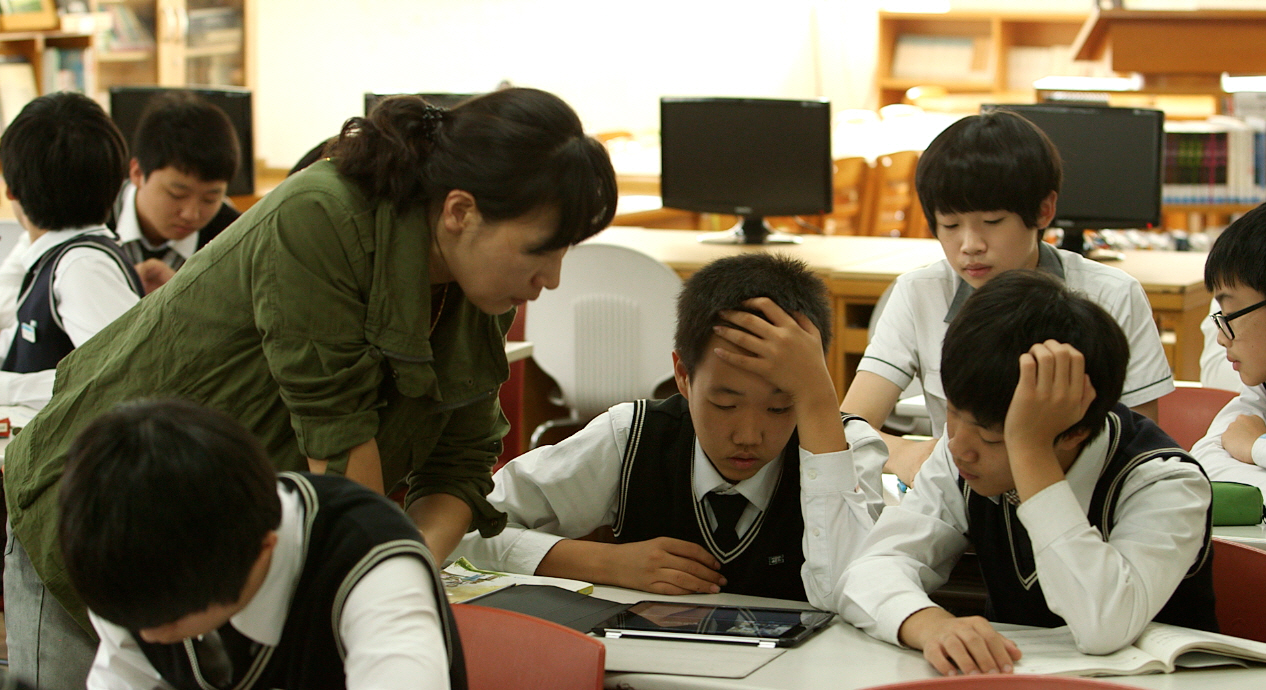
Busan change schools Korean society, classrooms
 https://www.christenseninstitute.org/blog/busan-schools-flip-koreas-society-classrooms/
Throughout this course, you've met teachers from various schools who are organizing innovation around the shared vision and shared language teaching. Here we meet a list of ideas, pedagogy, approaches, models, etc. which may be useful as it is considering "how amazing look" in terms of its practical problem. This list is just a sample; it is not intended to be exhaustive or comprehensive. 
Note: You do not need to read the entire contents here. Just follow the links that interest you.
Referenced in this course:
- Multilevel student support (MLSS) (including the frame Response intervention) - Example: public schools Mashpee (Unit 1) - This varies from one place to another, but this overall breakdown will be useful.
- STEM (Science, Technology, Engineering and Mathematics) and STEAM (Science, Technology, Engineering, Arts and Math) - Example: Benjamin Banneker Charter School in Cambridge, MA (Unit 3)

- Coalition of Essential Schools - Example: Community Charter School of Cambridge (appear in Unit 5)

- Based learning skills - Example: Sanborn High School (displayed in Unit 4). To read about education fairness and competition, click here .


Approaches to instruction and instructional design:
- Understanding by design : this way of thinking about curriculum planning emphasizes backward planning learning objectives.
- Teaching for Understanding : this approach to teaching and curriculum design emphasizes the general objectives of understanding the objectives of difficulty and continuous assessment.
- First principles of instruction : created with the intention to establish principles that will be useful to guide the development of education
- Universal design for learning : a framework designed to improve instruction when considering scientific understanding of how people learn
- Deeper Learning : one funded by the Hewlett Foundation to focus on learning experiences that emphasize skills and competencies that students will need for future efforts. Read more here .
- ARCS model (attention, relevance, confidence and satisfaction): instructional design approach driven by research on human motivation
- Online learning : more than one definition of this, but we agree that it is based on "the power of current technology to merge the interests, friendships and academic achievement of young people through experiences with practical production, shared purpose and open networks "(Connected Learning Infographic, Connected Learning Alliance, accessed August 22, 2017).
- Our instructor Justin Reich presents at the intersection of equity + learning + technology connected learning .
- Informal learning - oriented interests: Interested in increasing student motivation? Allow students to pursue their interests and pursue their passions.
- Learning self: promote this capacity will help students succeed.
- Learning Through Service and Community Engagement : combine learning goals with community service can make school more meaningful and valuable for students. Click here for some resources on integration of service-learning. Find resources on creating community partnerships here .
school models:
- Systems Thinking - Examples: Innovation Academy Charter School in Tyngsboro, Massachusetts and Waters Foundation
- Examples - project - based learning High Tech High and Science Leadership Academy
- Progressive, child - centered - Examples: Montessori and Reggio Emilia
- Democrat - Examples: Sudbury Valley School & Summerhill School
- Game - Based Learning: Quest to Learn
- "Sin excusas": UnCommon Schools & Match Education
Para cada unidad, seleccionamos un conjunto de lecturas que pueden ayudarlo a comprender y explorar mejor las ideas presentadas. Recomendamos elegir una lectura que se vea atractiva y relevante, y leer, examinar detenidamente o echar un vistazo a los demás.
- Bellow, Adam. 2016. " Hacer más con menos: comenzar de a poco y colaborar ". Edutopia .
- Daccord, Tom y Justin Reich. Consultado en noviembre de 2016. "El fracaso es obligatorio: crear una cultura de innovación ". EdTechTeacher.
- Daccord, Tom y Justin Reich. 2015. " Cómo transformar la enseñanza con tabletas ". Liderazgo educativo 72 (8): 18-23.
- Harrison, Cindy y Joellen Killion. 2007. " Diez roles para los líderes docentes ". Liderazgo educativo 65 (1): 74-77.
- Reich, Justin. 2015. " Mirando los juegos de clase con MathMistakes.org ". Blog de Justin Reich.
- Mehta, Jal y Sarah Fine. 2015. El por qué, qué, dónde y cómo de un aprendizaje más profundo en las escuelas secundarias estadounidenses . Trabajos para el futuro
Nuestro patrocinador del curso, Microsoft, ha desarrollado el Marco de Transformación Escolar de Microsoft, un conjunto de libros blancos y recursos que resumen décadas de investigación sobre liderazgo escolar y cambio escolar. Estos son algunos de los recursos que son relevantes para esta unidad:
- Microsoft. 2015. Estableciendo una Visión .
- Langworthy, Maria. 2015. Visión para el marco de transformación de Anytime Anywhere Learning for All . Microsoft.
- Microsoft. 2015. Capacidad de maestros y líderes .
- Jensen, Ben. 2015. Líder de la construcción y capacidad del educador para la transformación .
Comentarios
Publicar un comentario